вторник, 23 февраля 2021 г.

четверг, 18 февраля 2021 г.
“There is a lot of” vs “There are a lot of”
В английском языке есть случай, в котором официальная грамматика разводит руками. Этот случай – выбор между there is a lot of [people] и there are a lot of [people].
"There is a lot of" and "There are a lot of" are both legitimate terms, depending on whether the noun is countable or not.
For example:
- There are a lot of cars. ("cars" is countable)
- There is a lot of sugar. ("sugar" is not countable)
The ambiguity here comes from “a lot of” appearing to be a noun phrase when it’s actually not used in the same way. When people say “are a lot”, this is used not as a grouping noun but like a quantifying adjective, like “many”. While a singular verb is appropriate with nouns that define the plural into a singular group, “a lot of” refers to a quantity rather than a grouped unit – modifying the noun as “many” would. So the verb agrees with the noun that “a lot of” qualifies, rather than “a lot”. We can therefore have either “are a lot of” or “is a lot of” depending on our interpretation of this sentence. Mostly, we will use “There are a lot of” with countable nouns, when we discuss plurals, and “There is a lot of” with uncountable nouns, but there is of course flexibility here – in many cases it may be down to the individual’s interpretation of the sentence.
- There are a lot of apples.
It’s deceptive, but a good example of how exceptions to some of the simple rules of English can work – because words can be used for functions that are not what they immediately appear to be.
вторник, 15 декабря 2020 г.
вторник, 8 декабря 2020 г.
The words that mean "подходить", but they are used in different situations. 9th form.
Suit
Match
Fit
Go with
И ещё несколько выражений с похожими значениями:
пятница, 4 декабря 2020 г.
среда, 2 декабря 2020 г.


вторник, 1 декабря 2020 г.
WORLD AIDS DAY 2020
What Is HIV?
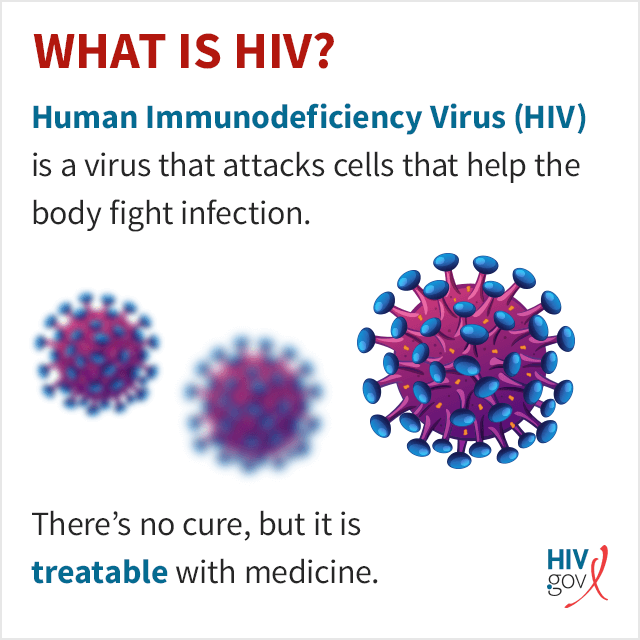
HIV (human immunodeficiency virus) is a virus that attacks cells that help the body fight infection, making a person more vulnerable to other infections and diseases. It is spread by contact with certain bodily fluids of a person with HIV, most commonly during unprotected sex (sex without a condom or HIV medicine to prevent or treat HIV), or through sharing injection drug equipment.
If left untreated, HIV can lead to the disease AIDS (acquired immunodeficiency syndrome).
The human body can’t get rid of HIV and no effective HIV cure exists. So, once you have HIV, you have it for life.
However, by taking HIV medicine (called antiretroviral therapy or ART), people with HIV can live long and healthy lives and prevent transmitting HIV to their sexual partners. In addition, there are effective methods to prevent getting HIV through sex or drug use, including pre-exposure prophylaxis (PrEP) and post-exposure prophylaxis (PEP).
First identified in 1981, HIV is the cause of one of humanity’s deadliest and most persistent epidemics.
What Is AIDS?
AIDS is the late stage of HIV infection that occurs when the body’s immune system is badly damaged because of the virus.
A person with HIV is considered to have progressed to AIDS when:
- the number of their CD4 cells falls below 200 cells per cubic millimeter of blood (200 cells/mm3). (In someone with a healthy immune system, CD4 counts are between 500 and 1,600 cells/mm3.) OR
- they develop one or more opportunistic infections regardless of their CD4 count.
Without HIV medicine, people with AIDS typically survive about 3 years. Once someone has a dangerous opportunistic illness, life expectancy without treatment falls to about 1 year. HIV medicine can still help people at this stage of HIV infection, and it can even be lifesaving. But people who start ART soon after they get HIV experience more benefits—that’s why HIV testing is so important.
More information
Content Source: HIV.gov